
Azoospermia Treatment in Gurgaon
Azoospermia means that no sperm are detected in the semen. It may occur when the testicles are unable to produce sperm adequately or when a blockage prevents sperm from reaching the ejaculate. Because the underlying causes can vary, the appropriate treatment depends on a detailed evaluation of the man’s reproductive and overall health.
Depending on the cause, azoospermia treatment in Gurgaon may include treatment for an underlying hormonal condition, surgery to correct a blockage, sperm retrieval procedures, or assisted reproductive techniques such as IVF with ICSI. In some cases, sperm can be retrieved from the reproductive tract or testicular tissue and used for fertility treatment.
What is Azoospermia?
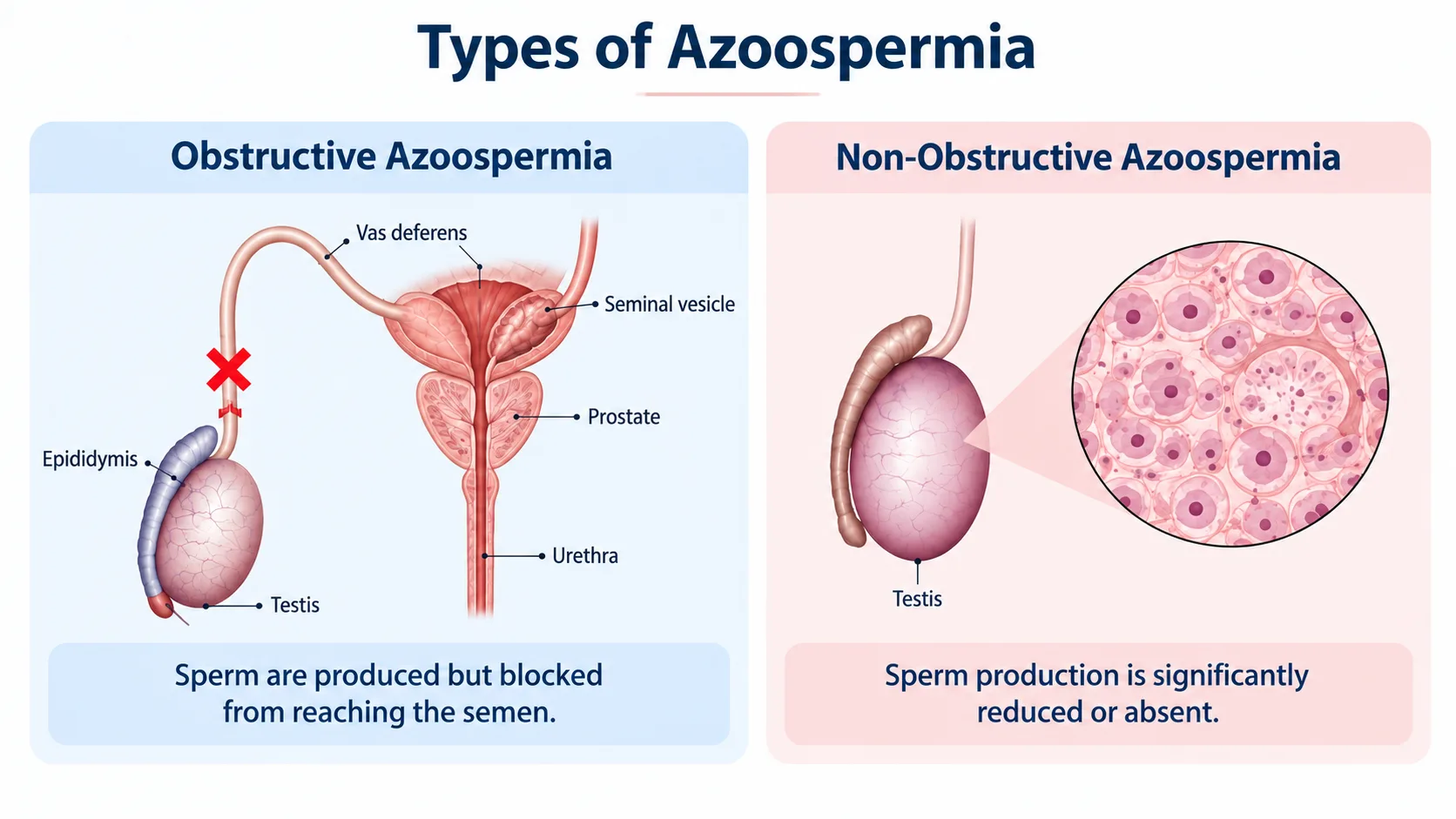
Azoospermia is a form of male infertility in which sperm are absent from the ejaculate. It is mainly classified as obstructive azoospermia, where sperm production is present but a blockage prevents sperm from reaching the semen, and non-obstructive azoospermia, where sperm production is significantly impaired.
Common factors associated with azoospermia include:
- Impaired sperm production
- Reproductive tract blockages
- Hormonal or genetic conditions
- Testicular disorders or injury
- Previous infections or surgeries
- Certain medications or medical treatments
- Chemotherapy or radiation therapy
Azoospermia does not always prevent biological fatherhood. Depending on the cause, treatment or sperm retrieval may allow some men to pursue assisted reproductive options.
Types of Azoospermia: Obstructive and Non-Obstructive Azoospermia
Azoospermia is primarily classified into two types: obstructive and non-obstructive. The key difference is whether sperm are being produced but blocked from reaching the semen or whether sperm production itself is significantly impaired.
Obstructive Azoospermia
Obstructive azoospermia occurs when the testicles produce sperm, but a blockage prevents the sperm from reaching the ejaculate.
It may be caused by:
- Previous vasectomy
- Infections or inflammation
- Scarring after surgery
- Blockage of the epididymis or vas deferens
- Congenital absence or abnormalities of the vas deferens
- Ejaculatory duct obstruction
Because sperm production may be preserved, some men may be candidates for surgical correction or sperm retrieval.
Non-Obstructive Azoospermia
Non-obstructive azoospermia occurs when the testicles produce very little or no sperm due to impaired sperm production.
Possible causes include:
- Genetic abnormalities
- Testicular disorders
- Hormonal abnormalities
- Previous chemotherapy or radiation
- Certain medications or substances
- Severe impairment of sperm-producing cells
Treatment depends on whether an identifiable and treatable cause is present and whether sperm can be retrieved from the testicular tissue.
Reach Out for Expert Care
Why Does Azoospermia Occur?
Azoospermia can occur when sperm production is impaired or when sperm cannot travel from the testicles into the semen. The underlying causes can involve hormonal, genetic, testicular, or reproductive-tract problems.
Common causes of azoospermia include:
- Hormonal problems: Disorders affecting the hypothalamus or pituitary gland can interfere with the hormones needed for sperm production.
- Genetic conditions: Conditions such as Klinefelter syndrome and Y-chromosome microdeletions can affect sperm production.
- Testicular disorders: Damage or abnormalities affecting the testicles may reduce or stop sperm production.
- Reproductive tract blockage: A blockage in the epididymis, vas deferens, or ejaculatory ducts can prevent sperm from entering the semen.
- Previous infections: Certain infections can damage reproductive structures or cause scarring and blockage.
- Previous surgery: Vasectomy and some pelvic or reproductive surgeries can interfere with sperm transport.
- Cancer treatment: Chemotherapy and radiation therapy may affect sperm production.
- Certain medicines or substances: Testosterone therapy and anabolic steroids can suppress sperm production.
How is Azoospermia Diagnosed?
Azoospermia is confirmed when repeated semen analysis shows no sperm in the ejaculate. The sample may also be examined after centrifugation to confirm that sperm are truly absent. Further tests help determine whether the cause is a blockage, reduced sperm production, a hormonal problem or another underlying condition.
The evaluation may include:
- Semen analysis: Usually repeated to confirm the finding and assess other semen parameters.
- Medical history: Previous surgeries, infections, medications, testosterone use, chemotherapy and family history may be reviewed.
- Physical examination: The testicles, epididymis and vas deferens are examined for abnormalities.
- Hormone tests: FSH, testosterone and other hormones may be checked to assess sperm production and hormonal function.
- Genetic testing: Karyotyping and Y-chromosome testing may be recommended in men with azoospermia, depending on the clinical findings.
- Ultrasound or other imaging: Scrotal ultrasound or other imaging may be used when needed to assess the testicles or look for signs of obstruction.
Identifying the underlying cause is important because the treatment approach differs between obstructive and non-obstructive azoospermia.
Azoospermia Treatment Options in Gurgaon
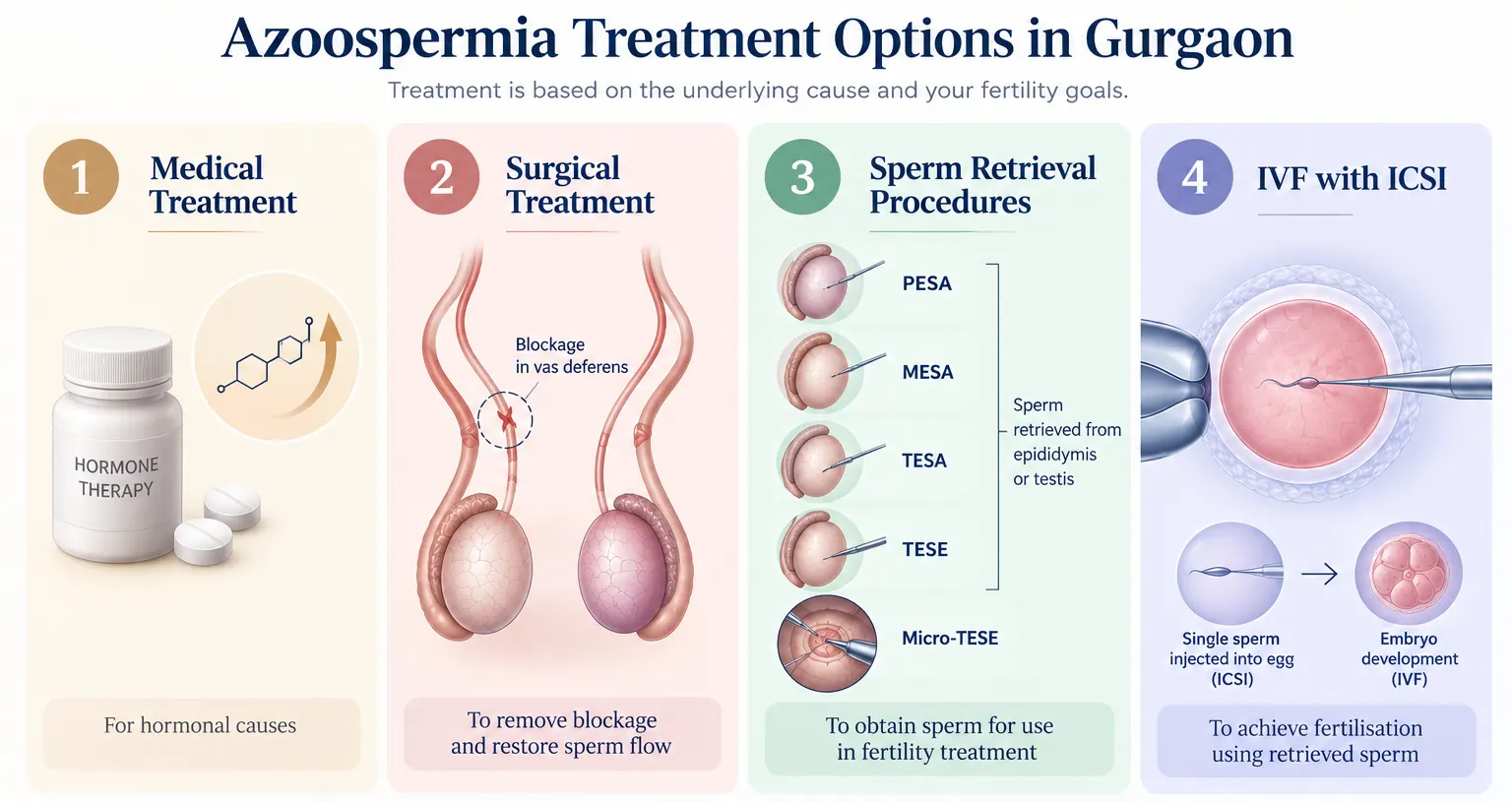
The right treatment for azoospermia depends on whether sperm production is present or whether a blockage is preventing sperm from reaching the semen. After a detailed evaluation, treatment is planned according to the underlying cause and the couple’s fertility goals.
Medical Treatment
If azoospermia is linked to certain hormonal conditions, treatment may help improve sperm production in selected cases. The treatment plan is based on hormone levels and the underlying diagnosis.
Surgical Treatment
Men with obstructive azoospermia may benefit from surgery if a blockage is preventing sperm from entering the semen. In suitable cases, restoring the passage of sperm or performing a sperm retrieval procedure may be considered.
Sperm Retrieval
When sperm are not present in the ejaculate, they may still be retrieved directly from the epididymis or testicles for use in fertility treatment. The procedure is chosen according to the type of azoospermia and where sperm are most likely to be found.
Common sperm retrieval techniques include:
- PESA (Percutaneous Epididymal Sperm Aspiration)
- MESA (Microsurgical Epididymal Sperm Aspiration)
- TESE (Testicular Sperm Extraction)
- Micro-TESE (Microsurgical Testicular Sperm Extraction)
For men with non-obstructive azoospermia, Micro-TESE may be recommended in selected cases because it allows a more targeted search for viable sperm.
IVF and ICSI
When sperm are successfully retrieved, they can be used as part of an IVF cycle. In many cases, ICSI (Intracytoplasmic Sperm Injection) is performed, where a single sperm is injected directly into an egg to achieve fertilisation.
Interested in these procedures? Learn more about IVF Treatment, ICSI Treatment, and TESE (Testicular Sperm Extraction) by Dr. Meenu Handa.
Every case of azoospermia is different. A personalised assessment helps determine whether medical treatment, surgery, sperm retrieval, or assisted reproduction is the most appropriate next step.
Why Choose Dr. Meenu Handa For Azoospermia Treatment in Gurgaon?
Dr. Meenu Handa provides personalised fertility care for men with azoospermia and other male infertility concerns, with treatment focused on identifying the underlying cause and choosing an appropriate fertility pathway.
- 20+ years of experience in infertility and assisted reproduction.
- 10,000+ couples consulted and guided through fertility care.
- Comprehensive evaluation based on medical history, semen analysis, hormone levels and reproductive health.
- Cause-focused assessment to identify obstructive, hormonal, genetic or testicular factors.
- Personalised treatment planning based on the underlying cause and fertility goals.
- Sperm retrieval and assisted reproduction guidance, including appropriate use of IVF and ICSI.
- Continuity of care from diagnosis and treatment planning through assisted reproduction and follow-up.
Take the Next Step towards Azoospermia Treatment
Azoospermia treatment depends on its underlying cause. With the right evaluation, options such as sperm retrieval, surgery, IVF, or ICSI may help some couples pursue pregnancy.
Consult Dr. Meenu Handa for personalised azoospermia treatment in Gurgaon.
Contact Number: +91 8796337470
Email: mailinfo@drmeenuhanda.com
Book Appointment: https://drmeenuhanda.com/book-appointment
Frequently Asked Questions
Can Azoospermia be treated? expand_more
Yes, azoospermia can be treated depending on its cause. Treatment may include medication, surgery, sperm retrieval, or IVF/ICSI.
What is the average cost of azoospermia treatment in Gurgaon? expand_more
The cost of azoospermia treatment in Gurgaon varies based on the cause, diagnostic tests, medications, surgery, sperm retrieval, or IVF/ICSI required.
What causes low sperm motility? expand_more
Low sperm motility can be caused by infections, varicocele, hormonal or genetic factors, testicular conditions, certain medications, and lifestyle factors. It is different from azoospermia, where no sperm are found in the semen.
Is IVF or ICSI required for azoospermia treatment? expand_more
Not always. IVF or ICSI may be recommended when sperm retrieval is required or when other fertility treatments are not suitable.
What are the symptoms of azoospermia? expand_more
Azoospermia often has no noticeable symptoms. Difficulty conceiving is commonly the first indication, and the condition is confirmed through semen analysis.
How long does azoospermia treatment take? expand_more
Treatment duration depends on the underlying cause and treatment approach. Medical treatment may require several months, while surgical or sperm retrieval procedures may take less time.
How to book an appointment with Dr. Meenu Handa? expand_more
You can contact Dr. Meenu Handa’s clinic to schedule an appointment for azoospermia evaluation and personalised fertility treatment in Gurgaon.

Dr Meenu Handa Medical Content Team
Dr Meenu Handa Medical Content Team specialises in creating accurate, clear, and patient-focused healthcare content. With strong clinical understanding and expertise in technical writing and SEO, the team translates complex medical information into reliable, accessible resources that support informed decisions and uphold ’s commitment to quality care.