
Hysteroscopy in Gurgaon
Hysteroscopy is a minimally invasive procedure used to examine and treat uterine conditions. Hysteroscopy in Gurgaon with Dr. Meenu Handa may be recommended for abnormal bleeding, infertility, recurrent pregnancy loss, polyps, fibroids, adhesions, and other uterine abnormalities.

Book Appointment
Our team will get back to you within a few hours
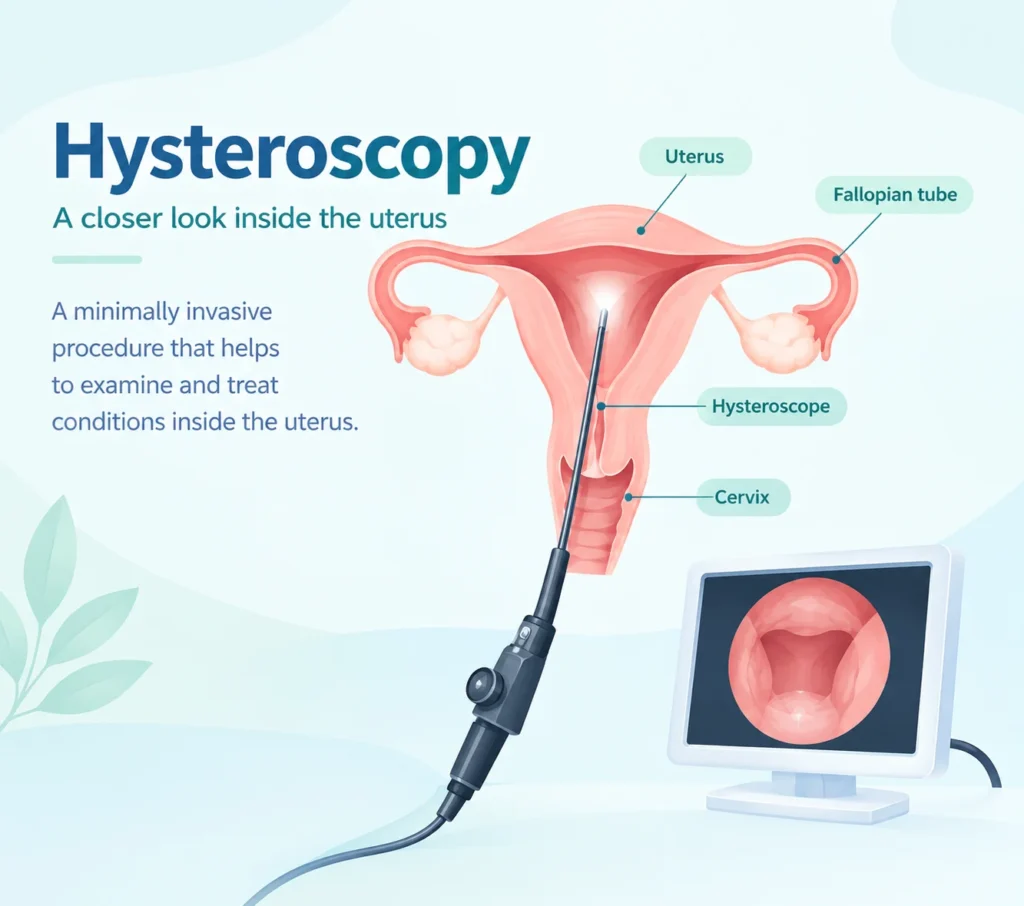
What Is Hysteroscopy?
A minimally invasive procedure to examine the inside of the uterus
Hysteroscopy uses a thin, lighted instrument called a hysteroscope to view the inside of the uterus. The hysteroscope is gently passed through the vagina and cervix into the uterus, allowing the doctor to examine the uterine lining and identify abnormalities.
A saline solution or another suitable fluid may be used to gently expand the uterus, providing a clearer view of the uterine cavity.
Depending on the reason for the procedure, hysteroscopy may be:
- Diagnostic hysteroscopy: Used to examine the uterus and identify abnormalities.
- Operative hysteroscopy: Used to treat certain conditions, such as removing polyps, fibroids, or scar tissue.
- Diagnostic and operative hysteroscopy: Diagnosis and treatment may sometimes be completed during the same procedure.
When Is Hysteroscopy Recommended?
Hysteroscopy may be recommended when a doctor needs to investigate symptoms, fertility concerns, or abnormalities affecting the uterine cavity.
Abnormal Uterine Bleeding
Hysteroscopy can help investigate heavy, irregular, or bleeding between periods when an abnormality inside the uterus is suspected.
Infertility Evaluation
In selected cases, hysteroscopy may be used to examine the uterine cavity when investigating difficulty getting pregnant or abnormalities identified during fertility evaluation.
Recurrent Pregnancy Loss
Hysteroscopy may be considered in selected patients when a uterine cavity abnormality is suspected during the evaluation of recurrent pregnancy loss.
Uterine Polyps or Fibroids
Polyps and certain fibroids that project into the uterine cavity may be identified and, when appropriate, removed during operative hysteroscopy.
Uterine Adhesions
Hysteroscopy can help identify and treat scar tissue or adhesions within the uterus.
Abnormal Uterine Shape
The procedure may help evaluate abnormalities such as a uterine septum when indicated.
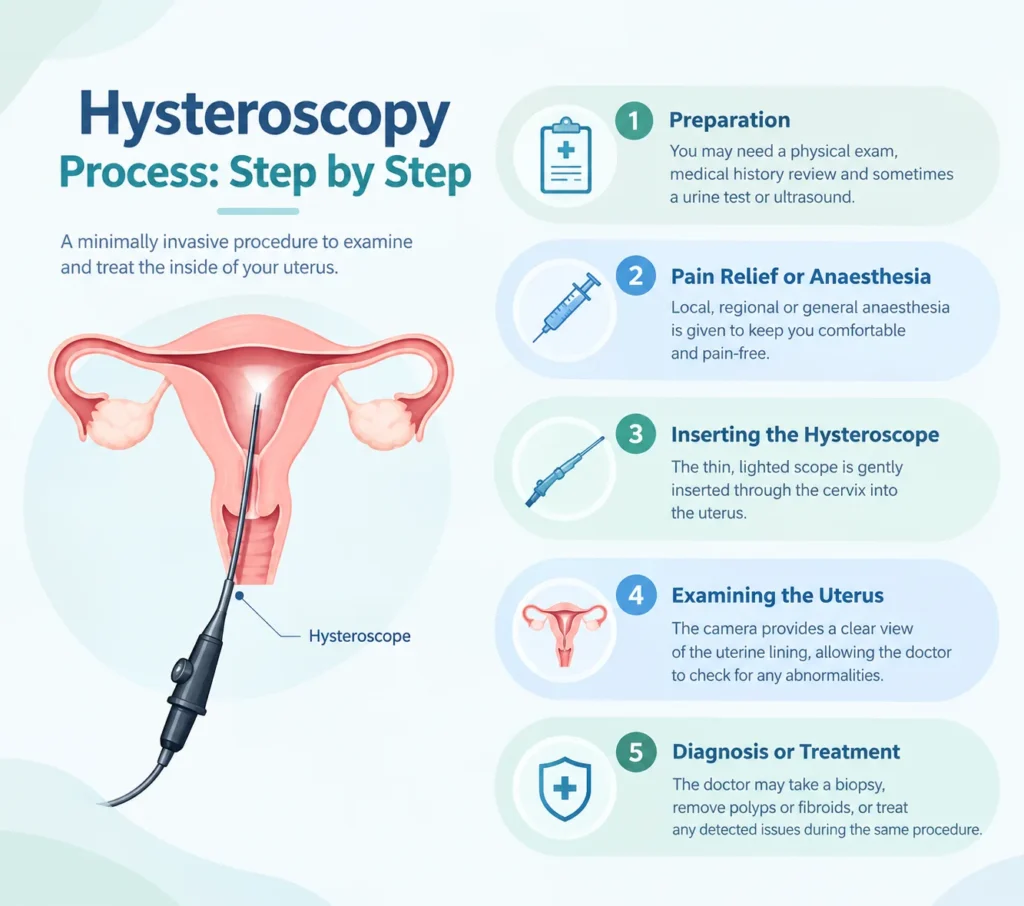
Hysteroscopy Process: Step by Step
Understanding what to expect before, during, and after hysteroscopy
A simple, step-by-step approach to examining and treating the uterine cavity
1. Preparation
Your doctor will review your medical history, medicines, symptoms, fertility history, and relevant test results. Depending on your individual case, a pregnancy test or other investigations may be recommended. If sedation or anaesthesia is planned, you may also be advised to fast before the procedure.
2. Pain Relief or Anaesthesia
The type of pain relief depends on the procedure and individual requirements. Options may include local anaesthesia, sedation, or general anaesthesia.
3. Inserting the Hysteroscope
You will usually lie on your back with your feet supported. The hysteroscope is gently passed through the vagina and cervix into the uterus.
4. Examining the Uterus
Saline or another suitable fluid may be introduced to gently expand the uterus. This allows the doctor to clearly view the uterine cavity and lining through the camera.
5. Diagnosis or Treatment
If required, a small tissue sample may be taken for a biopsy. Special instruments can also be passed through the hysteroscope to remove polyps, certain fibroids, or scar tissue.
How Can Hysteroscopy Support Fertility Evaluation?
Minimally invasive, patient-focused surgical care
Hysteroscopy allows the doctor to directly examine the uterine cavity when an abnormality is suspected.
Depending on the individual diagnosis, it may help identify conditions such as:
Polyps → Fibroids → Adhesions → Uterine Septum → Other Cavity Abnormalities
When a treatable abnormality is identified, operative hysteroscopy may allow it to be addressed during the same procedure when appropriate.
Hysteroscopy is not required for every person experiencing infertility. Your doctor will determine whether it is appropriate based on your symptoms, reproductive history, previous investigations, and fertility goals.
Are There Any Risks With Hysteroscopy?
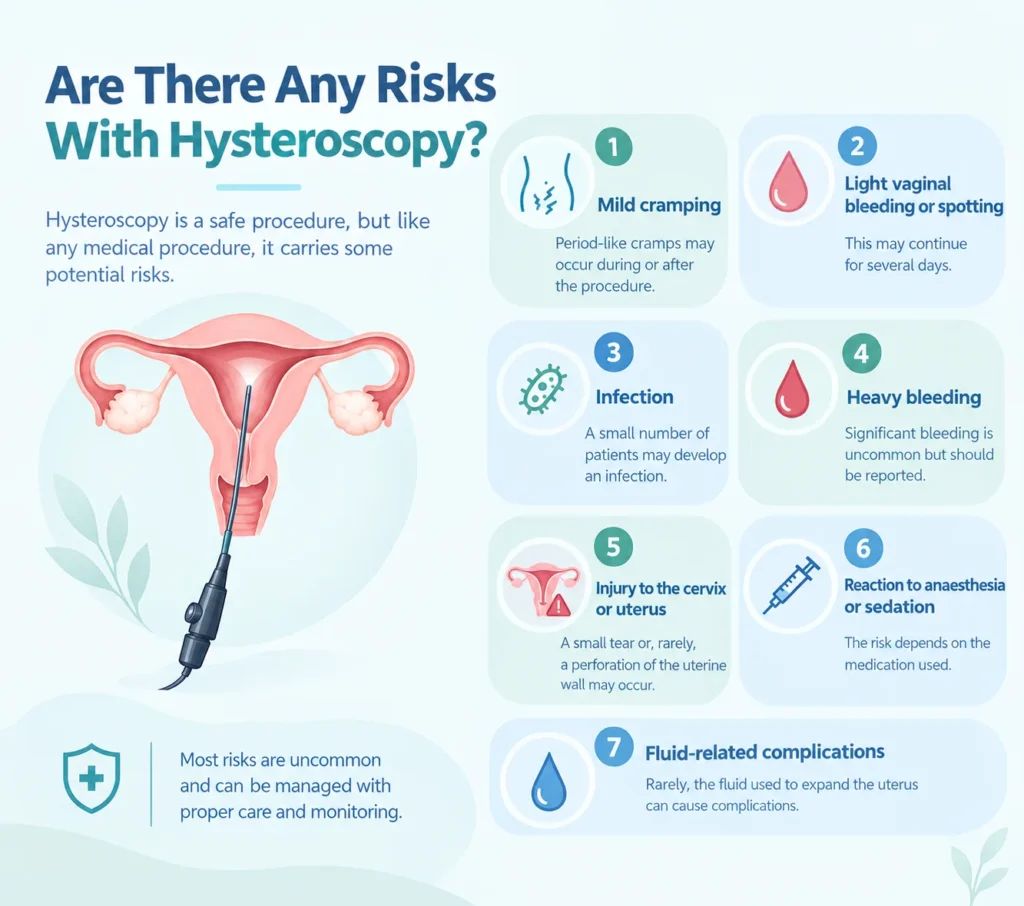
Hysteroscopy is generally considered a safe procedure, but like any medical procedure, it can have potential risks.
Possible risks include:
- Mild cramping: Period-like cramps may occur during or after the procedure.
- Light vaginal bleeding or spotting: This may continue for several days.
- Infection: A small number of patients may develop an infection.
- Heavy bleeding: Significant bleeding is uncommon but should be reported.
- Injury to the cervix or uterus: A small tear or, rarely, a perforation of the uterine wall may occur.
- Reaction to anaesthesia or sedation: The risk depends on the medication used.
- Fluid-related complications: Rarely, the fluid used to expand the uterus can cause complications.
When to contact your doctor: Seek medical advice if you experience heavy bleeding, severe or worsening abdominal pain, fever, chills, or unusual vaginal discharge after the procedure.
Recovery After Hysteroscopy
What to expect during recovery and when you can resume daily activities
Recovery is usually quick, although it can vary depending on whether the procedure was diagnostic or involved treatment.
You may experience:
- Mild period-like cramps
- Light vaginal bleeding or spotting
- Temporary tiredness or drowsiness after sedation or anaesthesia
- Mild discomfort for a short period
Your doctor may advise you to:
- Use pads instead of tampons while bleeding continues.
- Avoid sex or inserting anything into the vagina for the period recommended.
- Temporarily avoid swimming, baths, or strenuous exercise if advised.
- Take pain medication only as recommended.
- Attend a follow-up appointment when required.
The exact recovery period depends on the type of hysteroscopy and whether any treatment was performed.
Hysteroscopy in Gurgaon for Fertility and Uterine Health
Get personalised guidance on whether hysteroscopy is right for your uterine or fertility concerns.
Hysteroscopy may be an important part of fertility or recurrent pregnancy loss evaluation when a uterine cavity abnormality is suspected.
Dr. Meenu Handa focuses on identifying the underlying concern before recommending treatment. Depending on your diagnosis and reproductive goals, your fertility plan may include further evaluation, hysteroscopy, treatment of an identified uterine abnormality, or other fertility treatments when appropriate.
Why Choose Dr. Meenu Handa for Hysteroscopy in Gurgaon?
Personalised evaluation and fertility-focused care for uterine conditions
Dr. Meenu Handa provides personalised hysteroscopy care in Gurgaon, with treatment planning based on symptoms, reproductive history, fertility concerns, and individual uterine health.
- 20+ Years of Experience in infertility and assisted reproduction
- 10,000+ Fertility Consultations across a wide range of fertility concerns
- Personalised Hysteroscopy Planning based on symptoms, diagnosis, and reproductive goals
- Fertility-Focused Care when hysteroscopy is recommended during infertility or recurrent pregnancy loss evaluation
- Complete Fertility Care from assessment and diagnosis to treatment and follow-up
Frequently Asked Questions
Everything you need to know before your consultation
What is the average cost of hysteroscopy in Gurgaon? expand_more
The average cost of hysteroscopy in Gurgaon varies depending on the type of procedure, anaesthesia, investigations, facility charges, and whether treatment such as polyp or fibroid removal is performed.
How long does a hysteroscopy take? expand_more
A diagnostic hysteroscopy may take only a few minutes. Procedures involving biopsy or treatment can take longer depending on what needs to be done.
Is hysteroscopy painful? expand_more
Some patients may experience cramping or discomfort. Depending on the procedure and individual needs, local anaesthesia, sedation, or general anaesthesia may be used.
How should I prepare for hysteroscopy? expand_more
Preparation may include discussing your medical history and medicines, completing recommended investigations, and fasting if sedation or anaesthesia is planned. Follow your doctor's specific instructions.
How long does it take to recover after hysteroscopy? expand_more
Recovery varies according to the type of hysteroscopy and whether treatment was performed. Mild cramping and light bleeding or spotting may occur for a few days.
Can hysteroscopy help with infertility? expand_more
Hysteroscopy may help identify and, in selected cases, treat abnormalities inside the uterine cavity that may be relevant to fertility. It is recommended only when clinically appropriate after individual evaluation.
How to book an appointment with Dr. Meenu Handa for hysteroscopy in Gurgaon? expand_more
You can book an appointment with Dr. Meenu Handa for hysteroscopy in Gurgaon through the appointment or contact details provided on the website.