
Recurrent IVF Failure Treatment in Gurgaon
IVF Failed Twice? Let’s Understand Why Before You Try Again
Two failed IVF cycles can leave you feeling exhausted, confused, and uncertain about what to do next. You may be asking yourself, “Why did my IVF fail?” “Is there something wrong with me?”, or “Will IVF ever work for us?”
These are completely natural questions, and most couples who visit us have the same concerns.
The reassuring news is that two failed IVF cycles do not mean you cannot become pregnant. In many cases, the reason for repeated IVF failure can be identified and treated. Sometimes it is related to embryo quality, while in other cases it may involve the uterus, hormones, egg quality, sperm health, or other factors that were not recognised earlier.
The important thing is not to repeat the same treatment without understanding what went wrong.
Dr. Meenu Handa, a fertility doctor in Gurgaon, believes every couple receives a fresh evaluation. Instead of simply planning another IVF cycle, Dr. Meenu Handa carefully reviews your previous treatments, understands your medical history, and creates a personalised fertility plan designed to improve your chances of a successful pregnancy.
Whether your IVF has failed twice, you’ve experienced recurrent IVF failure, or you’re looking for an IVF second opinion in Gurgaon, we’re here to help you move forward with clarity, confidence, and hope.
Book a Consultation | Get a Second Opinion
What Is Recurrent IVF Failure?
There isn’t one universal definition of recurrent IVF failure, but most fertility specialists recommend a detailed evaluation after two or more unsuccessful IVF or ICSI cycles, especially if good-quality embryos have already been transferred.
Many people assume that if IVF doesn’t work, another cycle with the same treatment will eventually succeed. While that can happen, it isn’t always the best approach.
Every unsuccessful IVF cycle provides valuable information. Looking closely at what happened during your previous treatment can often reveal why pregnancy didn’t occur and what can be done differently next time.
Think of recurrent IVF failure as a sign that your fertility journey needs a closer look, not that your dream of becoming a parent is over.
Quick Answer: Can You Get Pregnant After Two Failed IVF Cycles?
Yes. Absolutely. Many couples conceive successfully after two or more failed IVF attempts.
The key is finding out why the earlier cycles were unsuccessful. Once the underlying cause is identified, your fertility specialist can make meaningful changes to the treatment plan, improving the chances of implantation and pregnancy.
For many couples, a personalised approach makes all the difference.
Reach Out for Expert Care
Why Has My IVF Failed More Than Once?
This is one of the first questions patients ask, and understandably so.
The truth is that IVF is a complex treatment. For pregnancy to happen, several things need to come together at the right time.
- The eggs should develop well.
- Healthy embryos need to form.
- The uterus should be ready to receive the embryo.
- Hormones must be balanced.
- The embryo needs to implant successfully in the uterine lining.
If any one of these steps is affected, pregnancy may not occur.
Sometimes an IVF cycle fails simply because nature is unpredictable. But when IVF fails repeatedly, it’s important to investigate whether there is an underlying medical reason that can be treated.
Common Causes of Recurrent IVF Failure
If your IVF has failed twice or you’ve experienced recurrent IVF failure, one or more underlying factors may be affecting your chances of pregnancy.
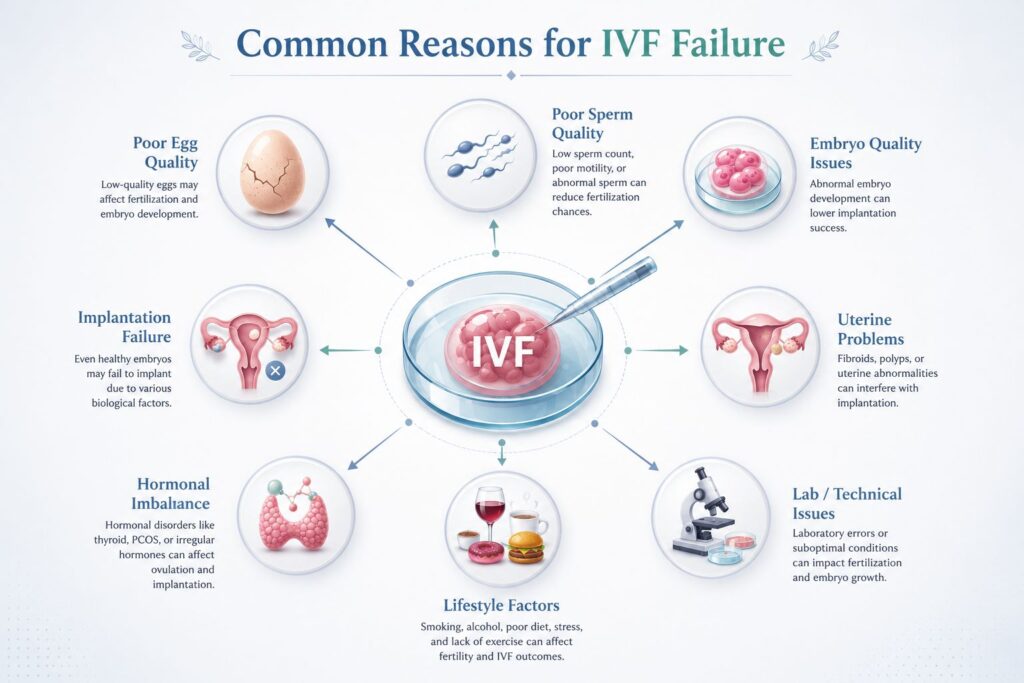
- Poor Embryo Quality: Even good-looking embryos may have chromosomal abnormalities that prevent successful implantation.
- Reduced Egg Quality: Poor egg quality can affect fertilisation, embryo development, and the chances of a healthy pregnancy.
- Male Factor Infertility: Poor sperm quality or sperm DNA fragmentation can reduce embryo quality and IVF success.
- Uterine Problems: Conditions like fibroids, polyps, adenomyosis, or scar tissue can interfere with embryo implantation.
- Recurrent Implantation Failure: A healthy embryo may fail to implant if the uterine lining is not receptive at the right time.
- Hormonal Imbalance: Hormonal conditions such as PCOS, thyroid disorders, or low progesterone can affect implantation and pregnancy.
- Lifestyle Factors: Smoking, obesity, poor diet, stress, and inadequate sleep can negatively impact fertility and IVF outcomes.
Small improvements can support your overall reproductive health and prepare your body for the next stage of treatment.
When Should You Seek a Second Opinion?
If your IVF has failed twice, it may be time to pause before starting another cycle.
A second opinion isn’t about changing doctors; it’s about making sure every possible factor has been carefully evaluated.
You should consider a detailed fertility assessment if you have:
- Two or more failed IVF or ICSI cycles
- Good-quality embryos but no pregnancy
- Multiple failed embryo transfers
- Recurrent implantation failure
- Early miscarriage after IVF
- Poor embryo development
- Thin uterine lining
- Unexplained infertility despite treatment
Sometimes, a fresh perspective can uncover answers that were previously missed and help you move forward with a treatment plan that’s truly personalised to your needs.

Dr Meenu Handa Medical Content Team
Dr Meenu Handa Medical Content Team specialises in creating accurate, clear, and patient-focused healthcare content. With strong clinical understanding and expertise in technical writing and SEO, the team translates complex medical information into reliable, accessible resources that support informed decisions and uphold ’s commitment to quality care.