
Diet After Embryo Transfer – Foods to Eat & Avoid for Implantation
After embryo transfer, follow a balanced diet rich in protein, whole grains, fruits, vegetables, and healthy fats, and ensure adequate fluid intake. Include Indian foods such as dal, paneer, curd, eggs, roti, and fresh fruits. Avoid alcohol, raw or undercooked foods, unwashed produce, and high-mercury fish, and limit caffeine. No specific food guarantees implantation or IVF success.
Why Does Diet After Embryo Transfer Matter?
A balanced diet after embryo transfer provides essential nutrients that support your body during the implantation period and early pregnancy. While no particular food can guarantee implantation or IVF success, eating nutritious and hygienically prepared meals can support overall health.
After IVF transfer, focus on:
- Getting enough protein, iron, folate, and healthy fats
- Eating fresh fruits and vegetables
- Choosing whole grains and pulses
- Staying well hydrated
- Following your doctor’s prescribed medicines and supplements
What to Eat After Embryo Transfer for a Healthy Pregnancy?
After embryo transfer, choose a balanced diet that provides protein, iron, folate, healthy fats, fibre, vitamins and minerals. There is no single food that can guarantee implantation, but nutritious meals can support your overall health during the two-week wait and early pregnancy. You should prioritise the following nutrients in your diet:
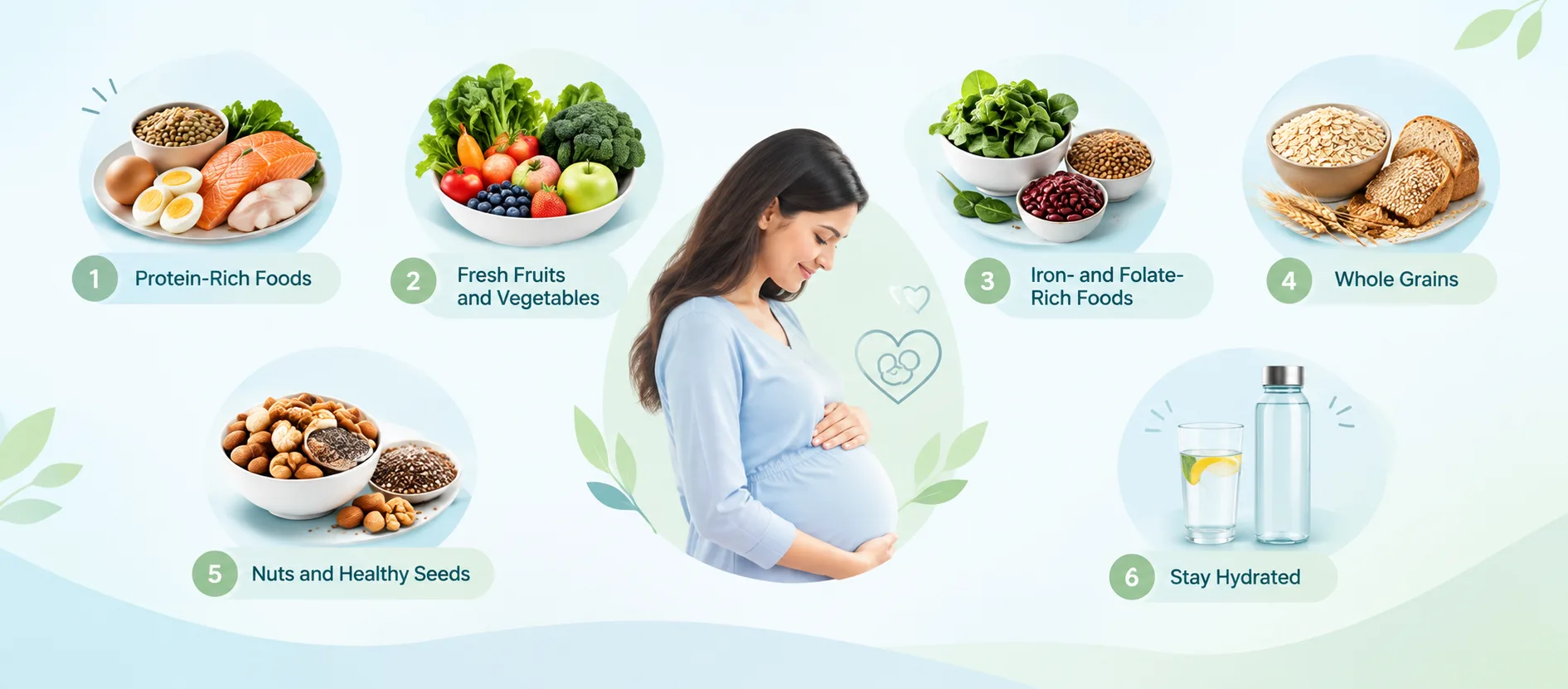
1. Protein-Rich Foods
Include protein with your meals to make your diet more balanced. Good options include:
- Dal and lentils
- Rajma and chickpeas
- Paneer and tofu
- Curd and milk
- Well-cooked eggs
- Well-cooked fish or lean meat
2. Fresh Fruits and Vegetables
Add a variety of properly washed fruits and vegetables to your diet after embryo transfer. Fruits such as apples, bananas, guava and pomegranate, along with leafy greens and other vegetables, provide fibre, vitamins and minerals.
3. Iron- and Folate-Rich Foods
Green leafy vegetables, lentils, beans, peas and other nutrient-rich foods can help you meet your iron and folate requirements. If your doctor has prescribed folic acid or iron supplements, continue taking them as advised.
4. Whole Grains
Choose nutritious carbohydrate sources such as whole-wheat roti, oats, daliya, brown rice, and other whole grains. These can provide fibre and help create satisfying, balanced meals.
5. Nuts and Healthy Seeds
Almonds, walnuts, and seeds such as flaxseeds can be included in moderate portions to add healthy fats and other nutrients to your IVF diet.
6. Stay Hydrated
Drink enough water throughout the day. You can also include suitable fluids such as coconut water if they fit your diet and your doctor’s advice.
Note: The key is variety, moderation, and food safety, not following a restrictive implantation diet. Choose fresh, well-cooked, and nutritious foods and continue your prescribed IVF medicines and supplements as directed by your fertility specialist.
What Not to Eat After Embryo Transfer?
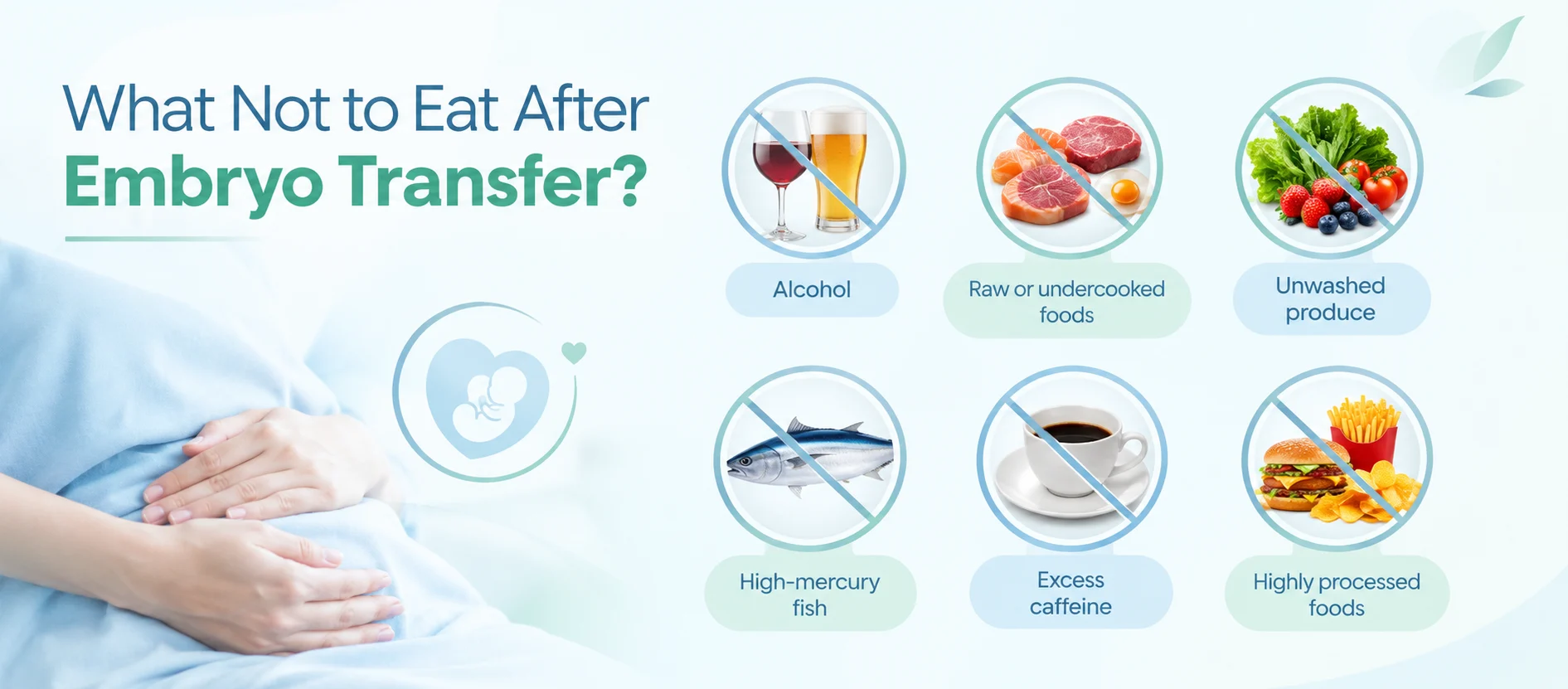
After embryo transfer, focus on food safety and moderation rather than avoiding a long list of foods. Certain foods and drinks are best avoided or limited during the implantation period and early pregnancy.
- Alcohol: Avoid completely after embryo transfer.
- Raw or undercooked foods: Avoid raw eggs, undercooked meat, seafood, and other foods that may increase the risk of infection.
- Unwashed produce: Wash fruits and vegetables thoroughly before eating.
- High-mercury fish: Avoid fish that are high in mercury during this period.
- Excess caffeine: Limit coffee, tea, energy drinks, and other caffeinated beverages.
- Highly processed foods: Keep fried foods, packaged snacks, and foods high in added sugar to a minimum.
Sample Indian Diet Chart After Embryo Transfer
This sample Indian diet chart after embryo transfer provides a variety of protein, whole grains, fruits, vegetables, and healthy fats. Use it as a general example, and adjust portions and food choices according to your nutritional needs and fertility specialist’s advice:
| Meal | Suggested Options |
| Early-Morning | Warm water + 4–5 soaked almonds/walnuts |
| Breakfast | Vegetable oats/daliya + curd or 2 well-cooked eggs + whole-wheat toast |
| Mid-Morning | Fresh fruit such as apple, guava, banana or pomegranate |
| Lunch | 2 whole-wheat rotis + dal/rajma + cooked vegetables + curd + salad |
| Evening Snack | Roasted makhana/chana + coconut water |
| Dinner | Roti or brown rice + paneer/tofu/dal + cooked vegetables |
| Bedtime | Warm milk, if suitable for you |
Tip: Keep meals fresh, well-cooked, and balanced; drink enough water, and continue prescribed IVF medicines and supplements as directed. This is a general post-embryo-transfer diet chart, not a substitute for personalised medical advice.
What Does Research Say About Embryo Transfer?
Research suggests that overall nutrition may support reproductive health, but no single food or diet can guarantee embryo implantation or IVF success. A 2026 systematic review, “Diet in assisted reproductive technology: what should we recommend?”, found links between healthier dietary patterns and better reproductive outcomes, although consistent improvements in live-birth rates have not been established.
Similarly, “Parental diet, pregnancy outcomes and offspring health: metabolic determinants in developing oocytes and embryos” (2013) highlighted the importance of nutrition around conception and early embryo development. Therefore, after embryo transfer, focus on balanced, nutritious, and safe meals rather than restrictive diets or specific foods.
What Difference Does a Balanced Diet Make To Embryo Transfer Success?
A balanced diet cannot guarantee embryo implantation, but it can help meet your nutritional needs during the post-embryo-transfer period and early pregnancy. You can present the benefits in a simple table:
| Nutritional Benefit | How It Helps | Food Sources |
| Adequate Protein | Supports normal cell and tissue growth | Dal, paneer, eggs, curd, beans |
| Folate & Iron | Supports healthy blood formation and early pregnancy nutrition | Leafy greens, lentils, beans |
| Healthy Fats | Provides essential fatty acids as part of a balanced diet | Walnuts, almonds, seeds |
| Fibre | Supports healthy digestion | Fruits, vegetables, oats, whole grains |
| Vitamins & Minerals | Helps meet overall nutritional requirements | Fruits, vegetables, dairy, whole grains |
| Adequate Hydration | Helps maintain normal fluid balance | Water, suitable fluids, coconut water |
Note: A healthy diet supports overall nutritional health, but factors such as embryo quality, age, uterine health, and the underlying fertility condition also influence IVF outcomes.
How Can Dr. Meenu Handa Help You During Your Embryo Transfer Journey?
Embryo transfer can bring questions about diet, medicines, lifestyle, and what to expect next. Dr. Meenu Handa, an experienced IVF and fertility specialist in Gurgaon, provides personalised guidance throughout the fertility journey. Here is why patients choose Dr. Meenu Handa for their treatment:
- 20+ years of experience in fertility and reproductive medicine
- 10,000+ couples consulted and guided
- 5,000+ IVF, ICSI, and fertility procedures performed
- Recipient of 7 national and international awards
- Trusted by couples across 12+ countries
- Expertise in IVF, ICSI, IUI, recurrent IVF failure, PCOS, low AMH, and other fertility concerns
Get Personalised Guidance After Embryo Transfer
Have questions about your diet after embryo transfer, foods to eat or avoid, or post-transfer care? Dr. Meenu Handa provides personalised IVF and fertility guidance based on your individual needs.
Book a consultation with Dr. Meenu Handa for expert support throughout your IVF journey.