
IVF Diet Chart: What to Eat and Avoid During IVF Treatment
Many patients ask before starting IVF: Can what I eat actually make a difference?
There is no specific diet that can guarantee IVF success, but eating a balanced, nutritious diet can support your overall health during treatment. The goal isn’t to follow a strict “IVF diet” or search for miracle foods. Instead, focus on adequate protein, whole grains, vegetables, fruits, healthy fats, and good hydration.
The focus should be on realistic, sustainable food choices rather than restrictive diets or miracle foods. This guide offers a practical diet chart for IVF treatment covering what to eat, what to limit, and how to make informed nutrition choices during treatment.
What Should You Eat During IVF Treatment?
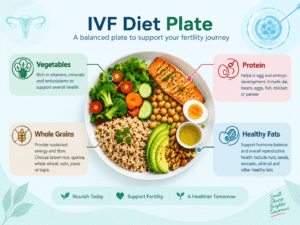
The aim of an IVF diet chart is not to follow a strict or restrictive plan. Instead, focus on balanced meals that provide enough protein, fibre, healthy fats, vitamins, minerals, and fluids. Simple, home-cooked meals with a variety of whole foods are generally a practical choice during IVF. To put this into practice, focus on these simple, nutrient-rich choices:
- Protein-Rich Foods
Include a source of protein in your main meals to support a balanced diet. Good options include dal, chickpeas, kidney beans, eggs, paneer, curd, fish, and chicken. Vegetarians can combine pulses, dairy, and whole grains throughout the day for variety.
- Whole Grains and Fibre
Choose whole wheat roti, oats, brown rice, jowar, bajra, and other whole grains more often than refined carbohydrates such as white bread and maida-based foods. Fibre-rich foods can also support digestive health and help maintain steadier blood sugar levels.
- Vegetables and Fruits
Add a variety of colourful vegetables and seasonal fruits to your daily meals. Spinach, methi, broccoli, carrots, guava, oranges, papaya, and berries are practical choices. Prefer whole fruits over juices to retain their natural fibre.
- Healthy Fats
Include moderate amounts of healthy unsaturated fats from almonds, walnuts, flaxseeds, pumpkin seeds, avocado, and olive oil. Ghee can also be included in small amounts if it fits your usual diet. Limit foods high in trans fats, such as heavily processed snacks and frequently fried foods.
- Dairy
Milk, curd, and paneer can provide useful amounts of protein and calcium. If you are lactose intolerant or prefer plant-based options, choose fortified alternatives where possible to help meet your nutritional needs.
- Hydration
Make water your main drink and sip regularly throughout the day. Individual fluid needs vary, but around 8–10 glasses of water a day can be a practical general guide. Limit sugary drinks, soft drinks, and packaged juices. Staying adequately hydrated is particularly important during IVF treatment.

Sample IVF Diet Chart (One Day)
This is a general example for an Indian vegetarian patient. It is not a prescription.
| Time | Meal | What to Include |
| Early Morning (6–7 am) | Warm drink | Warm water with lemon, or a small cup of ginger-tulsi herbal tea |
| Breakfast (8–9 am) | Main breakfast | Vegetable oats upma or 2 whole wheat rotis with dal and a small bowl of curd |
| Mid-Morning (11 am) | Light snack | A seasonal fruit (guava, apple, or orange) and a small handful of mixed nuts |
| Lunch (1–2 pm) | Main meal | Brown rice or 2 rotis, dal or rajma, a sabzi with leafy greens, salad, and curd |
| Evening Snack (4–5 pm) | Light snack | Roasted chana or a small bowl of sprouts with lemon and cucumber |
| Dinner (7–8 pm) | Main meal | 2 whole wheat rotis, a vegetable curry, dal, and a small bowl of curd or raita |
| Optional Bedtime Snack | Light | A small glass of warm milk with a pinch of turmeric, if tolerated |
Please note: This is a general example only. Your nutritional needs during IVF may differ based on your health history, medications, and treatment protocol. Please discuss your diet with your fertility specialist or a registered dietitian.
Foods and Substances to Limit or Avoid
During IVF, the focus should not be on creating a long list of “forbidden” foods. Instead, a few everyday choices are worth paying closer attention to. Some substances are best avoided altogether, while others are simply better limited to support overall health and treatment. Here are the key things to keep in mind:
- Alcohol: Avoid alcohol completely during IVF. Since there is no established safe level during this period, most fertility specialists recommend stopping altogether.
- Smoking and tobacco: Avoid smoking and tobacco products, and limit exposure to second-hand smoke where possible. This applies to both partners.
- Caffeine: Moderate intake, such as around one cup of tea or coffee a day, is different from consuming several cups. Discuss your usual caffeine intake with your doctor, as recommendations may vary depending on your treatment protocol.
- Highly processed and packaged foods: Foods such as biscuits, instant noodles, and ready meals can be high in refined carbohydrates, sodium, and additives. They do not need to be completely eliminated, but are best kept occasional rather than becoming the foundation of your diet.
- Excessively sugary foods and drinks: Large amounts of mithai, sugary sodas, and sweetened yoghurt are worth limiting, particularly if you have PCOS, insulin resistance, or an increased risk of gestational diabetes.

Please note: Food safety matters too. During IVF, it is sensible to take a little extra care with food hygiene. Avoid raw or undercooked eggs, unpasteurised dairy products, and foods from places where hygiene standards are uncertain. Wash fresh fruits and vegetables thoroughly before eating them. The goal is not to become fearful or overly restrictive with food, but to make sensible choices during an important stage of treatment.
Does Diet Really Improve IVF Success?
A healthy diet can support your overall health during IVF, but it cannot guarantee or directly determine IVF success.
Eating a balanced diet can help maintain healthy weight, blood sugar, energy levels, and nutritional status. A Mediterranean-style diet, rich in vegetables, fruits, whole grains, legumes, fish, nuts, and olive oil, has also been linked with better reproductive outcomes in some studies. However, the evidence is still inconsistent, and there is not enough evidence to say that a specific diet improves IVF success rates.
In simple terms: eat well to support your body, but don’t feel pressured to eat perfectly. IVF success depends on several factors, including age, ovarian reserve, egg and sperm quality, embryo quality, uterine health, the cause of infertility, and the treatment protocol.
What About Supplements During IVF?
Some patients are advised to take supplements — folic acid, vitamin D, iron, or others based on their individual blood results, medical history, and treatment protocol. NICE guidance recommends 400 micrograms of folic acid daily for most women trying to conceive, with a higher dose of 5 mg for those in higher-risk groups (such as those with diabetes, a history of neural tube defects, or certain medications). Vitamin D supplementation is also commonly recommended.
However, IVF nutrition is not one-size-fits-all. What is appropriate for one patient may be unnecessary or even counterproductive for another. The same applies to herbal remedies and products marketed as “fertility boosters” — many have limited evidence, and some may interact with medications.
Do not start any new supplement, herbal product, or over-the-counter remedy without discussing it with your fertility specialist first.
 Practical Tips for Eating Well During IVF
- Eat regular, balanced meals. Skipping meals is not helpful and can affect blood sugar and energy levels.
- Stay well hydrated throughout the day, particularly during the stimulation phase.
- Prioritise home-cooked, minimally processed food where possible; you have more control over ingredients and hygiene.
- Avoid extreme dieting or sudden drastic changes during treatment. This is not the time for crash diets or aggressive calorie restriction.
- Maintain good food hygiene, especially with raw produce, eggs, and dairy.
- Follow your fertility specialist’s instructions above all else. General dietary guidance is a starting point, not a substitute for personalised medical advice.
Conclusion
There is no perfect IVF diet, and you don’t need to eat perfectly for your treatment to have a chance of succeeding.
Focus on regular, balanced meals, adequate protein and fibre, plenty of vegetables and fruit, healthy fats, good hydration and safe food choices. Avoid alcohol and smoking, keep caffeine moderate, and don’t start supplements or herbal products without discussing them with your fertility specialist.
Most importantly, remember that IVF success depends on many factors beyond diet. Nutrition is one part of supporting your overall health during treatment, not a measure of whether you are “doing IVF correctly.”
For personalised guidance on nutrition and IVF treatment, consult Dr. Meenu Handa, who can help you make informed choices based on your health and treatment plan.