
PGT-A (Preimplantation Genetic Testing for Aneuploidy) is a genetic screening test performed on embryos created during IVF. Previously known as PGS, PGT-A evaluates embryo chromosome number before embryo transfer and may provide additional information to support embryo selection in selected IVF cases.
For patients considering PGT-A testing in Gurgaon, the decision should be based on individual reproductive history, age, IVF treatment plan, number and quality of embryos available, and a discussion with a fertility specialist.
What Is PGT-A Testing?
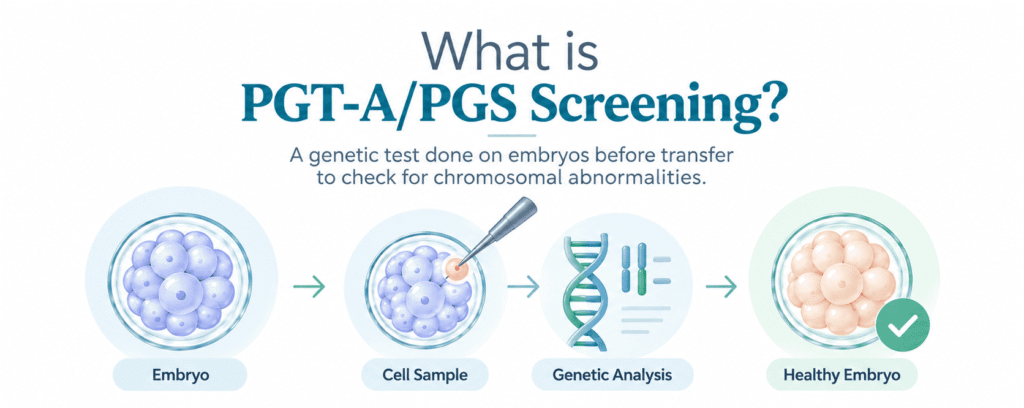
PGT-A stands for Preimplantation Genetic Testing for Aneuploidy. It is performed during IVF to check whether an embryo has the expected number of chromosomes.
The term PGS was used before the current PGT terminology was adopted. Today, PGT-A is the standard term used for testing embryo chromosome number or aneuploidy.
During PGT-A, a small sample of cells is taken from an embryo, usually at the blastocyst stage, and sent to a specialised laboratory for chromosome analysis. The results can provide additional information when the fertility team is considering embryo transfer.
PGT-A is a screening test, not a diagnostic test for every genetic condition. A PGT-A result also cannot guarantee implantation, pregnancy or a healthy baby.
Why Is Genetic Screening Important in IVF?
Genetic screening provides information about an embryo’s chromosome status before transfer. Embryos with an abnormal number of chromosomes may have a lower chance of developing normally and may be associated with implantation failure or miscarriage.
PGT-A/PGS may help:
- Assess embryo chromosome status
- Identify extra or missing chromosomes
- Support embryo selection
- Reduce the likelihood of transferring embryos identified as aneuploid
- Provide additional information for IVF treatment planning
Important: PGT-A is an embryo screening tool and should not be presented as a routine requirement or as a guarantee of improved IVF success for every patient.
What Can PGT-A Detect?
PGT-A primarily looks for aneuploidy, meaning an abnormal number of chromosomes.
Depending on the laboratory and testing method, PGT-A can identify embryos with:
- Extra chromosomes
- Missing chromosomes
- Chromosome-number abnormalities associated with conditions such as Down syndrome, Turner syndrome and Patau syndrome
- Results that may be reported as euploid, aneuploid or mosaic
PGT-A does not check for every genetic, developmental or health condition. Testing for a known single-gene disorder is a different type of preimplantation genetic testing called PGT-M.
Benefits of PGT-A in IVF
PGT-A can add chromosome information to the other factors already considered during IVF, such as embryo development and morphology.
Potential uses include:
- Providing information about embryo chromosome status
- Supporting embryo selection
- Helping avoid transfer of embryos identified as aneuploid
- Supporting treatment discussions in selected IVF cases
- Helping patients understand the chromosome findings of their tested embryos
The value of PGT-A varies between patients. It should be discussed in the context of the number of embryos available, treatment history, age and other clinical factors.
Limitations of PGT-A
PGT-A/PGS is a screening test and does not guarantee implantation, pregnancy, or a healthy baby. Its usefulness can vary depending on individual fertility factors and the number and quality of embryos available.
Important considerations include:
- Does not detect every genetic or health condition
- Cannot guarantee a successful pregnancy
- Results may sometimes show mosaicism
- Adds cost and time to the IVF process
- Not every embryo reaches the stage required for biopsy
- PGT-A may reduce the number of embryos available for transfer
- Prenatal testing may still be recommended during pregnancy
Mosaic results can be particularly complex because the cells sampled during embryo biopsy may not represent every cell in the embryo. Patients should receive appropriate counselling when such results are reported.
How Is PGT-A Done During IVF?
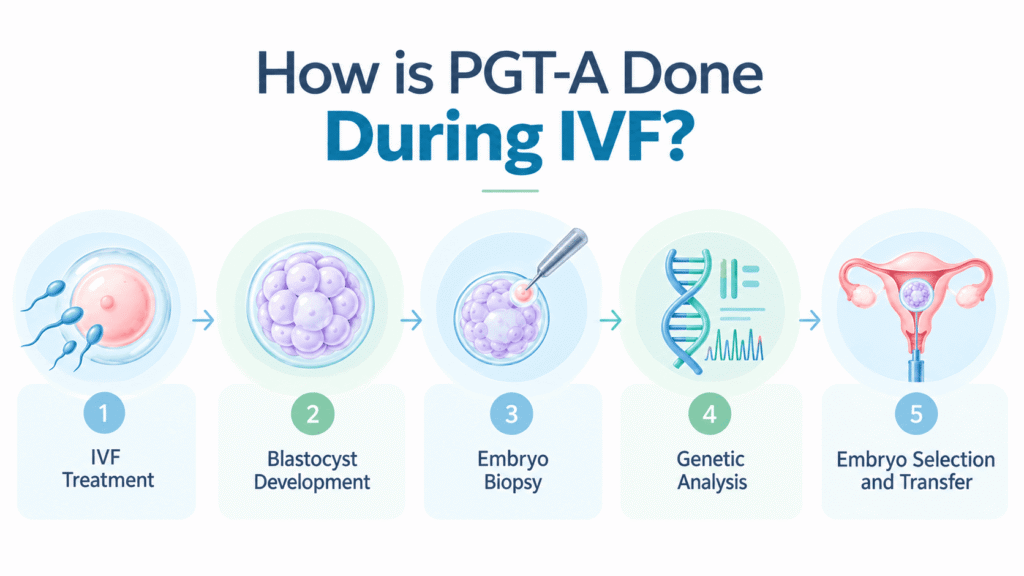
PGT-A is carried out as part of an IVF treatment cycle. It is generally performed after embryos reach the blastocyst stage, usually around day 5 or 6.
- IVF Treatment: Eggs are retrieved and fertilised with sperm to create embryos.
- Blastocyst Development: The embryos are cultured in the laboratory while they develop. Suitable embryos may reach the blastocyst stage.
- Embryo Biopsy: A small number of cells are collected from the embryo for genetic testing.
- Chromosome Analysis: The biopsy sample is analysed in a specialised genetic laboratory to assess embryo chromosome number.
- Embryo Transfer Planning: The PGT-A report is reviewed alongside the patient’s treatment history and other embryo information when planning embryo transfer.
Embryos may be cryopreserved while the testing process is completed, depending on the IVF laboratory protocol and treatment plan.
What Do PGT-A Results Mean?
PGT-A reports may use terms such as euploid, aneuploid and mosaic.
Euploid
A euploid result indicates that the tested embryo sample has the expected chromosome number.
Aneuploid
An aneuploid result indicates that the tested sample has an abnormal number of chromosomes.
Mosaic
A mosaic result means that different chromosome profiles are identified within the cells represented by the tested sample. Mosaic results can be difficult to interpret and should be discussed with the fertility specialist and, when appropriate, a genetic counsellor.
A PGT-A result should always be considered alongside the wider clinical picture. A euploid result does not guarantee implantation, pregnancy or a healthy baby.
Who May Consider PGT-A Testing in Gurgaon?
PGT-A is not appropriate or necessary for every IVF patient. A fertility specialist may discuss testing after considering factors such as:
- Maternal age
- Reproductive history
- Previous IVF outcomes
- Recurrent pregnancy loss
- Number of blastocysts available
- Embryo quality and development
- Individual treatment goals
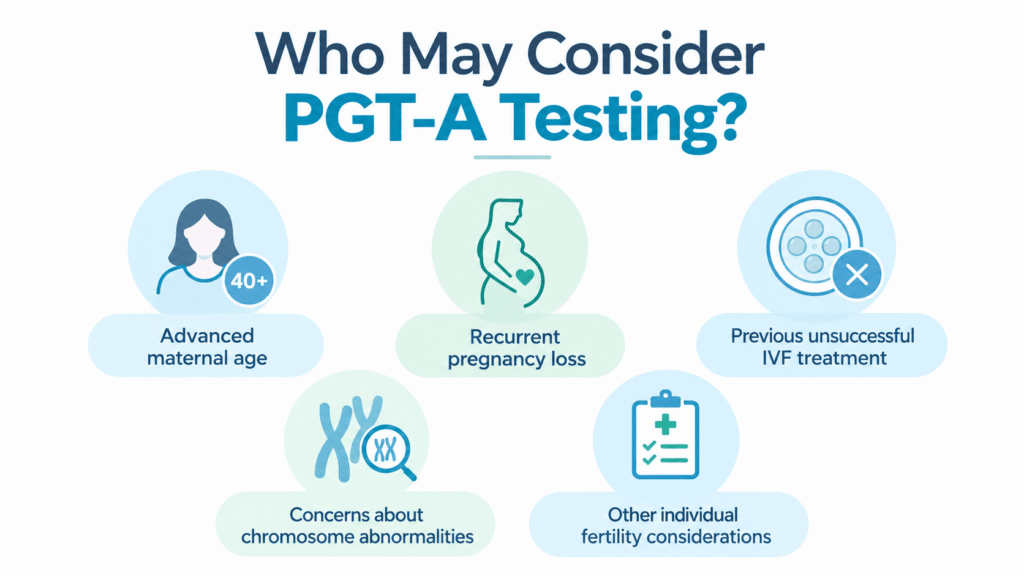
Having one of these factors does not automatically mean PGT-A is recommended. The decision should be made after discussing the potential benefits, limitations, costs and alternatives.
PGT-A Testing Cost in Gurgaon
The cost of PGT-A testing in Gurgaon generally ranges from around ₹50,000 to ₹1,00,000, depending on the number of embryos tested, biopsy and genetic laboratory charges, and other IVF requirements. This is an indicative range rather than a fixed price.
The overall cost may vary based on:
- Number of embryos available for testing
- Number of embryos undergoing biopsy and genetic analysis
- Genetic laboratory charges
- Embryology and biopsy charges
- Embryo freezing and storage, where applicable
- Other IVF treatment requirements
Because the number of embryos and laboratory requirements differ between patients, the exact PGT-A cost can be discussed during a consultation.
Why Choose Dr. Meenu Handa for PGT-A Testing in Gurgaon?
Dr. Meenu Handa provides fertility and IVF care in Gurgaon, including guidance for patients considering PGT-A testing as part of their treatment.
PGT-A decisions can depend on reproductive history, age, previous treatment, embryo availability and individual treatment goals.
- 20+ Years of Experience: Experience in infertility and assisted reproduction.
- 10,000+ Fertility Consultations: Experience across a wide range of fertility and reproductive concerns.
- Individualised PGT-A Planning: Discussion of PGT-A based on the patient’s IVF treatment plan and available embryos.
- Fertility-Focused Care: Genetic screening is considered as part of the wider fertility treatment plan.
- Complete Fertility Care: From fertility assessment and diagnosis to IVF treatment, embryo-related decisions and follow-up care.
Get PGT-A Testing in Gurgaon
PGT-A can provide additional information about embryo chromosome status before transfer, but it is not required for every IVF cycle.
A fertility consultation can help you understand whether PGT-A is relevant to your treatment plan, what the testing involves, and what its potential benefits and limitations mean in your situation.
Considering PGT-A or searching for PGS testing in Gurgaon? Discuss your IVF and embryo testing options with Dr. Meenu Handa.
Medical References
PGT-A is a specialised form of embryo chromosome screening used during IVF. Patients considering PGT-A should discuss its potential benefits, limitations, costs and alternatives with their fertility specialist.

Dr Meenu Handa Medical Content Team
Dr Meenu Handa Medical Content Team specialises in creating accurate, clear, and patient-focused healthcare content. With strong clinical understanding and expertise in technical writing and SEO, the team translates complex medical information into reliable, accessible resources that support informed decisions and uphold ’s commitment to quality care.